

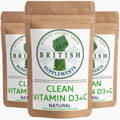
Vitamin D3 10,000 IU + Natural Vitamin C 98mg + Uptake Blend 64mg in every Vegetarian Capsule
Supplement details
Product Name: Vitamin D3 + Acerola Cherry (17% vitamin C)
Uptake Blend: Uptake blend 1:1:1 (Black Pepper extract (10% Piperine) Ginger Extract (5% Ginerol) Cumin extract (10:1))
9 parts Vitamin D3 and Vitamin C | Uptake Blend 1 part
Other Known Names: Cholecalciferol
What is it? Vitamin D3 + Acerola Cherry (natural vitamin C)
Vitamin D3, cholecalciferol, is the form your skin makes from sunlight, same molecule from a capsule as from a summer forearm. The vitamin C in this one isn't lab-made; it comes from acerola, Malpighia emarginata, a small bright-red cherry-like fruit from a shrub native to the Yucatán, the Caribbean and northern South America, and now grown mainly in Brazil.
Weight for weight it is one of the richest natural sources of vitamin C on earth, a raw acerola cherry runs at roughly 1,500-2,000 mg of vitamin C per 100 g, against about 50 mg for an orange.
Why the name. "Acerola" is Spanish, borrowed from Arabic, and originally meant a different tree altogether, Spanish colonists saw a red fruit and reused the word. Locally it's cereza de Barbados, Barbados cherry, or in Brazil just acerola.
Botanically it's no relation to a cherry at all. Vitamin C's chemical name, ascorbic acid, means "anti-scurvy", a-scorbutic, a rare case of a nutrient being named for what it prevents, and about the only reason the word "scurvy" is legally safe to put on a supplement page: it's the name.
How long people have used it. Acerola: the Taíno and Maya were eating it before Europeans arrived, so at least five hundred years documented and certainly far longer. It was carried through the Caribbean and to Brazil by the 1600s. Its vitamin C content was measured in Puerto Rico in 1945, and it was briefly a Cold War crop, the US grew it as a possible ration-pack vitamin source in the 1950s before synthetic vitamin C got cheap.
Brazil planted it seriously from the 1980s and now grows most of the world's supply, largely for the Japanese market, where it's a drink flavour.
Vitamin C as an idea: about 270 years. James Lind, a Scottish naval surgeon, ran what's usually called the first controlled clinical trial aboard HMS Salisbury in 1747, comparing treatments on twelve scurvied sailors, citrus won.
The Royal Navy took nearly fifty years to act on it, but from 1795 lime juice was issued to every sailor, which is where "limey" comes from. The vitamin itself was isolated by Albert Szent-Györgyi in Hungary in 1928-32, from paprika of all things, and he got the Nobel for it in 1937.
Who used it. For acerola: Caribbean and Brazilian households for centuries; the Japanese, more than anyone, since the 1980s. For vitamin D: see the D3 + K2 page, Mellanby, McCollum, Windaus, and the wartime British government dosing every child under five with cod liver oil. For vitamin C: the Royal Navy, and every generation since that's been told to eat its oranges.
Which part of the plant is used ? Vitamin D3 is made in a lab; all the rest are natural plant sources.
Strength / Specs ? Vitamin D3. Acerola Cherry (17% vitamin C). Blend
What exactly is in the Veg Capsules ? Vitamin D3 10,000 IU's + Vitamin C 98mg + uptake blend 64mg in veg capsules.
What exactly do we get ? Each Capsule has 100mg of Vitamin D3 which is 10,000 IU + Acerola Cherry 581mg (17% vitamin C = 98mg) + Uptake blend 64mg. 1:1:1 (Black Pepper extract (10% Piperine) Ginger Extract (5% Ginerol) Cumin extract (10:1)) . We sell all of our products in monthly packs so it's easy to buy and rebuy things that help us.


