

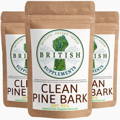
CLEAN pine bark 291MG + 32mg uptake blend to help deliver each capsule
Supplement details
Product Name: Pine Bark
Scientific Name: Pinus pinaster ssp. Atlantica
Other Known Names: Maritime pine, Maritime pine extract, Monterey pine extract, French pinus maritime bark, Pinus maritima,
What is it? Pine bark extract- OPCs
The inner bark of a pine tree, stripped, dried and extracted for a family of compounds called oligomeric proanthocyanidins- OPCs, which are the same class of astringent polyphenols that make red wine dry your mouth and give grape seeds and cranberries their bite.
Bark is where a tree keeps its chemical defences, so it's rich in them; a good extract concentrates that to over 90%. Ours is 95% OPC, from (Pinus massoniana, Masson pine, southern China / Pinus pinaster, French maritime pine).
Why the name.Pinus is just Latin for pine. Proanthocyanidin means "before anthocyanin", heat them in acid and they turn into the red-purple pigments of berries, which is how chemists first spotted them.
"Oligomeric" means the molecules come in short chains, two to five units long, which is what separates OPCs from the long, heavy tannins in oak bark and tea. Pycnogenol is a trademark, not a substance, it belongs to a Swiss company, Horphag, and just means their maritime pine extract, which is why every high-street brand selling "Pycnogenol" is selling the same 30 or 40 mg from the same supplier.
How long people have used it. Pine bark as food and drink: for as long as people have lived among pine trees. The Sami and the Finns ate the inner bark of Scots pine, dried and ground into pettu and baked into bark bread.
Every spring for centuries and in quantity through the famines of the 1690s and 1860s; the Mohawk name for their Algonquin neighbours, Adirondack, means "bark-eaters" and was not meant kindly.
Bark, needle and resin all appear in the Chinese materia medica from the Shennong Bencao Jing onward. And in the winter of 1535 the French explorer Jacques Cartier, iced in on the St Lawrence with his crew failing, was shown by the Iroquois how to brew the bark and needles of a local conife.
The account says the men recovered, and which tree it was, pine, cedar, spruce, has been argued about ever since.
The extract is French and dates from just after the war. Jacques Masquelier, a chemist at the University of Bordeaux, read Cartier's account as a student and went looking for what was in the bark.
He isolated OPCs from peanut skins in 1947–48, from grape seed shortly after, and in 1951 from the bark of the maritime pines of Les Landes, the vast plantation forest south of Bordeaux, the largest man-made forest in Europe, planted under Napoleon III to drain the marshes and cut for turpentine.
He patented the extraction that year and spent the next forty years on it; the Pycnogenol name and Horphag's commercial version came in the 1970s and 80s. Chinese pine bark extract from Pinus massoniana followed from the 1990s as the domestic industry in Guangxi and Guangdong scaled up.
Who used it. In the sense of the leaf-and-bark tradition: the Sami, the Finns, the Iroquois and Algonquin peoples, and Chinese physicians for pine generally. In the sense of the extract: nobody before Masquelier, and mostly the French for the first thirty years, the man himself took it every day until he died in 2009 at 87.
What exactly do we get ? Each Capsule has 291mg of Pine Bark and 32mg Uptake blend 1:1:1: Black Pepper extract (10% piperine), Ginger extract (5% Ginerol), Cumin extract (10:1) per capsule. We sell all of our products in monthly packs so it's easy to buy and rebuy things that help us.


